
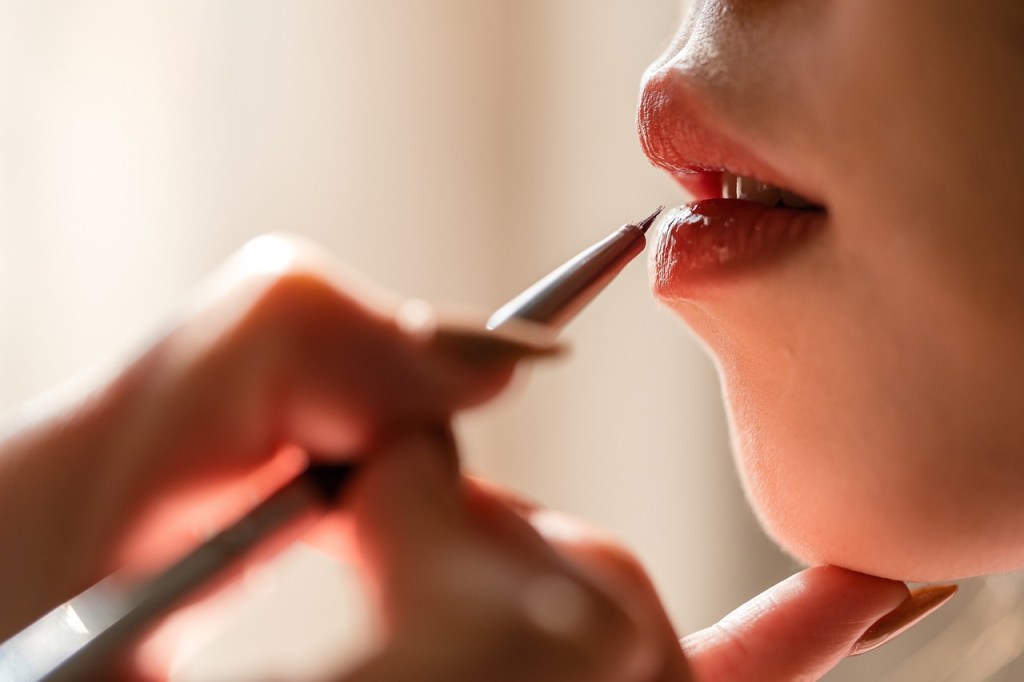
The intricate link between the image we present to the world and the opportunities we are afforded stretches back into the annals of history. No matter where in the world you are, what period of time, or what social class you are… Beauty matters. The standards by which beauty is measured vary depending on when and where you are but there has always been some vision to aspire to. Beautiful people, on average, are perceived to be smarter, more successful, more reliable, and overall more desirable. This bias was first observed and conclusively demonstrated in 1972, however, there are observations and records of this throughout human history – it is likely fair to say that no culture has not made this connection between beauty and opportunity. These aspirational qualities have driven many curious and captivating practices across cultures and, most recently, it has given rise to a multi-billion dollar global industry.
For the most part beauty characteristics were understood to be qualities that are not commonly naturally occurring in a population or occurred in youth and faded throughout maturity. Though, with all things, there are examples to prove a converse outlook. The Mayans are a great example of non-human factors driving perceptions of beauty. Within the Mayan culture maize was such an integral part of the society that beauty standards aligned with the physical traits of the plant. Women would style their hair and alter their facial features to align more closely with corn.
From the 10th century through to the late 19th century in Japan, blackened teeth were a signifier of beauty. The practice, called Ohaguro, consisted of applying a concoction to the teeth that would then act as a sealant. Not only did the blackened, sealed teeth demonstrate the good health and care of an individual, it also denoted the style and fashion-consciousness of the individual. Just as purple was an auspicious colour in western cultures during this time, black was considered a fashionable and luxurious colour in Japan. Luxe and high quality furniture, gifts, clothing, etc. was often sought after in black.
In Thailand, whitened skin has been a sought after throughout many centuries and cultural contexts. The implication of white, or light, skin in Thailand (a tropical country with a large agricultural setting) indicates the absence of hard or outdoor labour. Traditionally those who were wealthy or successful had lighter skin tones than those who were consistently out in the sun, resulting in a very clear physical marker of your social status. As a result, the practice of skin whitening – to artificially augment the appearance of your social class – became quite popular. As with many things, practices that are prevalent for enough time morph and change meaning and importance within a community. The result of this is that many people now just consider this an aesthetically pleasing look that they enjoy for themselves without much thought or weight given to the original cultural beginnings.
Regardless of culture, these appearance standards do pervade into the formation of individual identity. In essence, beauty standards are driven by what is called ‘Mimetic Desire’.
In short, mimetic desire means we desire something simply because others around us desire it. Often this is done without much conscious thought. Rene Girard identified this phenomenon in the early 20th century and coined the term, though it appears to be an innate human behaviour. With the rise of social media the presence of mimetic desire can be seen clearly. Changes in beauty standards have begun to accelerate with the introduction of the internet, an overwhelming presence of portable cameras, and a deference to visual representation.
The combination of ‘Beauty Bias’ and ‘Mimetic Desire’ has grown to a multi-billion dollar industry that began as a small seed in the early mind of humans.
While the beauty industry is currently growing at a phenomenal rate, it has been a profession present throughout the years. Depending on what part of history and where in the world you are located, beauty treatments were often considered an integral part of your health routine. As such, ‘beauty specialists’ were known by many names but have always been present in society.
Given the rate of expansion, it is important to proceed with “eyes wide open”. Our practices and services should be steeped in client focussed care and concern. Are our practices enhancing how clients feel?
As we step into 2025, instead of growing a multi-billion dollar industry further with unnecessary products, items, and procedures, the goal should be returning value to guests. The same guests and clients who have kept out industry alive and vibrant for over 2000 years.
References
Dimitrov, D., & Kroumpouzos, G. (2023). Beauty Perception: a Historic and Contemporary Review. Clinics in Dermatology, 41(1). https://doi.org/10.1016/j.clindermatol.2023.02.006
Dion, K., Berscheid, E., & Walster, E. (1972a). What is beautiful is good. Retrieved October 26, 2024, from psycnet.apa.org website: https://psycnet.apa.org/record/1973-09160-001
Dion, K., Berscheid, E., & Walster, E. (1972b). What is beautiful is good. Retrieved October 30, 2024, from psycnet.apa.org website: https://psycnet.apa.org/record/1973-09160-001
Frederick, D., Forbes, M., Gentle, B., Reynolds, T., & Walters, T. (2015). Beauty Standards. The International Encyclopedia of Human Sexuality, First Edition. Retrieved from The International Encyclopedia of Human Sexuality, First Edition website: https://d1wqtxts1xzle7.cloudfront.net/35445599/MCarpenter_Beauty_Standards-libre.pdf?1415294588=&response-content-disposition=inline%3B+filename%3DBeauty_standards.pdf&Expires=1729944072&Signature=hEAJm~hKXYkHc25NsheZIhfa37~THQKMbdEZTN~j86mUGngOyRaX8UquTJseGASGOCcfXMHgbVw7gwP-64eDoQY~S1Zz-8QH0-9aC5a9tkRaQ84pwbO3wYajxQDEvyWwPdbZCsY7VsYvqX3dZDmLbvB3FfZWxyJnCvuqgdcXQGLVj2zPyW0VRMWu8KC07y7ttAj9yyAUW~d8hxZPk19bZKwvtusrwFT4N6TH9TSG~ZkpIYLcf-94LbIXlULuqs6t9Ovb5fkRzoobN4PJrUyzH0SXR2B17i7RSWx2xDTN-NSs08hX~vaxjgz122TDQ32EyxFS5oexksX5T-AS5~WsiQ__&Key-Pair-Id=APKAJLOHF5GGSLRBV4ZA
Kim, K. (2013, May 10). The Effect of Personality, Physical Attractiveness, and Intelligence on Important Life-Course Outcomes – ProQuest. Retrieved October 30, 2024, from Proquest.com website: https://www.proquest.com/openview/8557bb27a9d6b2b1a623a479fd009a51/1?pq-origsite=gscholar&cbl=18750
Maymone, M. B. C., Laughter, M., Dover, J., & Vashi, N. A. (2019). The malleability of beauty: perceptual adaptation. Clinics in Dermatology, 37(5), 592–596. https://doi.org/10.1016/j.clindermatol.2019.05.002
rapidlash. (2023, May 18). The History of Eyebrow Enhancers. Retrieved October 30, 2024, from rapidlash website: https://rapidlash.com/blogs/lashing-out-blog/the-history-of-eyebrow-enhancers
Ricketts, R. M. (1982). Divine Proportion in Facial Esthetics. Clinics in Plastic Surgery, 9(4), 401–422. https://doi.org/10.1016/s0094-1298(20)31936-2
Singh, D., & Singh, D. (2011). Shape and Significance of Feminine Beauty: An Evolutionary Perspective. Sex Roles, 64(9-10), 723–731. https://doi.org/10.1007/s11199-011-9938-z
Watkins, C. D. (2017). Creating beauty: creativity compensates for low physical attractiveness when individuals assess the attractiveness of social and romantic partners. Royal Society Open Science, 4(4), 160955. https://doi.org/10.1098/rsos.160955
Zebrowitz, L. A., Hall, J. A., Murphy, N. A., & Rhodes, G. (2002). Looking Smart and Looking Good: Facial Cues to Intelligence and their Origins. Personality and Social Psychology Bulletin, 28(2), 238–249. https://doi.org/10.1177/0146167202282009
 signaturemobilespa.com.au